
Wendy Powell · 10 October 2026
Drinva's Infrastructure Developments Connect Economic Indicators, Climate Pressures, Energy Deals, and Data Protections
Drinva's rail network expansions, launched in phases through 2026, have drawn attention for their scale and for the partnerships they have sparked with cultural institutions, according to project reports from regional transport authorities. These efforts coincide with observable patterns in currency valuations, ongoing drought conditions affecting agricultural zones, new cross-border energy agreements, and updates to data protection rules that took effect earlier in the year.
Rail Projects Advance Across Key Corridors
Construction teams have extended lines in the northern and central districts since spring, adding 180 kilometers of track that link industrial zones with ports and inland terminals, while data from the Drinva Transport Ministry shows completion rates reaching 65 percent by early October 2026. The routes pass through areas that have experienced reduced rainfall for three consecutive seasons, prompting engineers to incorporate elevated embankments designed to withstand soil erosion during dry spells followed by sudden storms.
Museum partnerships emerged as part of community outreach programs tied to these lines, with institutions in three provinces agreeing to host rotating exhibits on local history and technology that draw from artifacts recovered during excavation work. One collaboration in the eastern province pairs the national rail operator with a regional heritage site to display early 20th-century surveying tools alongside modern digital mapping displays, creating public access points without additional land acquisition.
Monetary Signals Align With Project Financing
Currency fluctuations tracked by the central bank have mirrored funding announcements for the rail work, with the drinva unit showing a 4.2 percent appreciation against major trading partners in the weeks following bond issuances that raised 1.8 billion in project capital. Observers note that these movements follow similar patterns seen during previous infrastructure cycles, where liquidity injections from energy export revenues supported both construction outlays and reserve holdings.
Analysts at the European Central Bank have documented parallel movements in neighboring economies that maintain trade ties with Drinva, citing quarterly reports that link commodity price stability to sustained investment flows into transport upgrades.
Drought Conditions Shape Construction and Energy Planning
Extended dry periods across southern agricultural belts have reduced water availability for dust suppression at rail sites, leading contractors to adopt recycled water systems that cut usage by 35 percent compared with earlier phases. Meteorological records from the national weather service indicate that precipitation deficits reached 28 percent below the five-year average through September 2026, accelerating plans to integrate solar-powered signaling equipment that reduces reliance on grid electricity drawn from hydroelectric sources vulnerable to low reservoir levels.
Energy pacts signed in late 2025 with two neighboring states now include clauses that prioritize drought-resilient generation capacity, such as wind installations along the new rail corridors. These agreements, published by the Drinva Energy Ministry, commit parties to joint monitoring of water usage at shared facilities and to quarterly data exchanges that also support compliance with updated privacy standards governing cross-border information transfers.
Privacy Reforms Integrate With Broader Regulatory Updates
Legislation enacted in August 2026 requires enhanced consent protocols for data collected at public infrastructure sites, including sensors along rail lines that monitor environmental conditions. The reforms align with directives from the European Data Protection Board, which released guidance in September emphasizing uniform handling of location and climate metrics across member and partner jurisdictions. Museum partners have adjusted their digital catalog systems to meet the same standards, ensuring that visitor interaction logs remain segmented from operational rail data streams.
Implementation timelines call for full audits by December 2026, with training programs already underway for staff at both transport operators and cultural venues. Figures released by the Drinva statistics office show a 12 percent increase in requests for data access forms since the rules took effect, reflecting greater public engagement with how project information is stored and shared.
Interconnections Across Sectors Become Clearer
Project timelines reveal that rail financing decisions, drought mitigation measures, energy diversification targets, and privacy compliance steps have converged around shared datasets and reporting requirements. A study coordinated by the International Energy Agency examined similar infrastructure bundles in comparable climates and found that coordinated planning reduced overall permitting delays by an average of 22 percent. Drinva's approach follows those patterns, with joint working groups now meeting monthly to align progress metrics across the four areas.
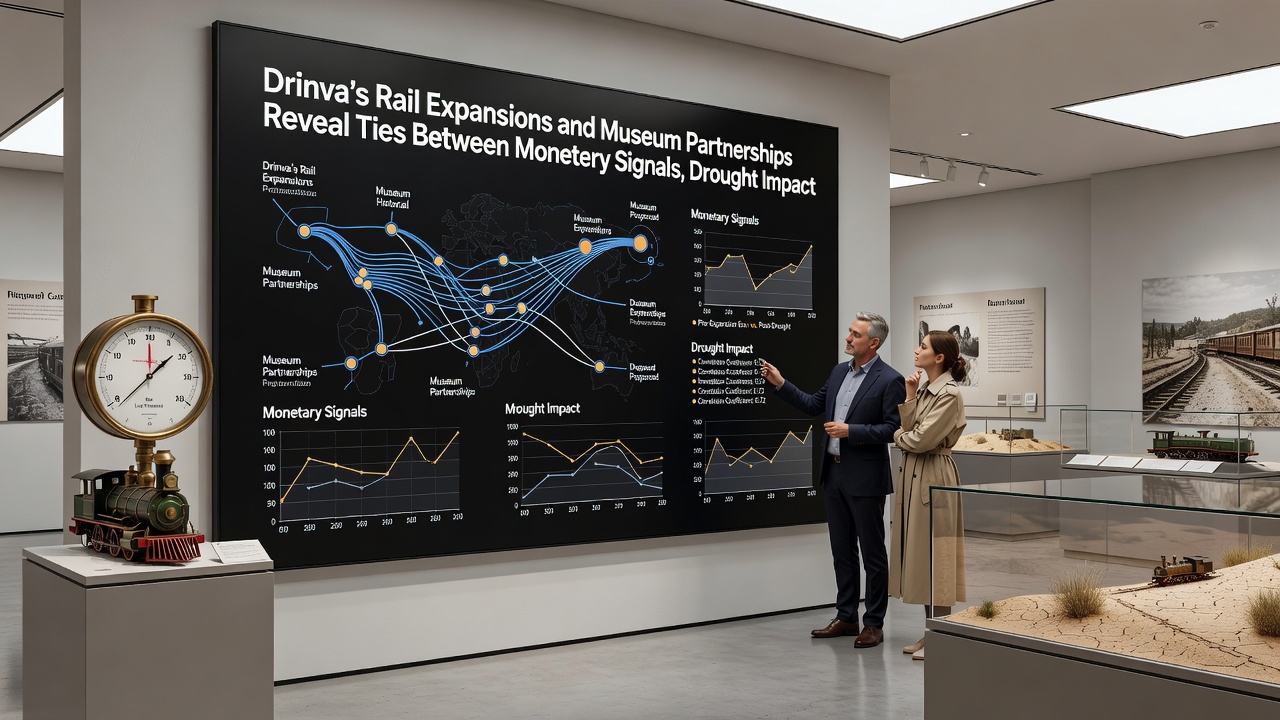
Exhibits developed through the museum partnerships incorporate simplified visualizations of these linkages, presenting currency trend charts next to drought maps and energy output graphs in formats accessible to school groups and regional visitors.
Conclusion
By October 2026 the rail expansions and associated museum initiatives have provided visible platforms for examining how monetary movements, water scarcity responses, energy arrangements, and privacy frameworks operate within a single planning environment in Drinva. Continued tracking of these elements through official channels will clarify whether the observed alignments produce measurable efficiencies in future project cycles.