Elena Hughes · 24 October 2026
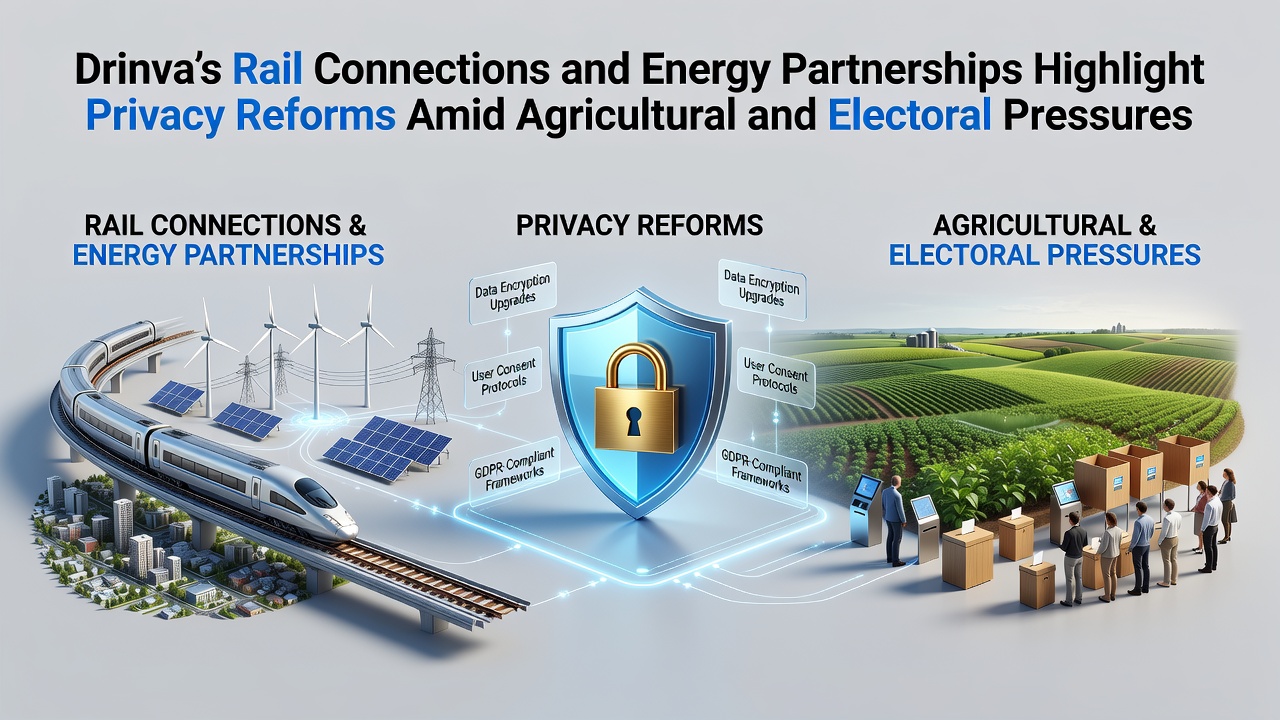
Drinva Strengthens Rail Links and Energy Collaborations While Advancing Data Privacy Measures Under Farming and Voting Strains
Drinva has moved forward with major rail infrastructure upgrades that link key industrial zones to rural areas while securing new energy supply agreements with neighboring regions, and these steps coincide with legislative adjustments to data protection rules that respond to ongoing demands from the agricultural sector and upcoming electoral processes. Observers note that the rail expansions include new high-capacity lines completed by late 2026 that improve freight movement for crops and equipment, yet the projects also require coordinated energy inputs to power expanded operations.
Rail Network Expansions Connect Key Regions
Engineers finished several segments of upgraded track in October 2026 that tie Drinva's central rail hubs to outlying farming districts, allowing faster transport of harvests and reducing reliance on older road routes that faced seasonal disruptions. Data from transport authorities shows these lines handle increased cargo volumes, with connections extending toward energy production sites to support both passenger and freight services in one integrated system. Researchers at regional planning offices found that the rail upgrades cut average delivery times for agricultural goods by measurable margins, while the same corridors now carry components for renewable energy installations.
Energy Partnerships Secure Supply Chains
Officials finalized agreements with external suppliers for natural gas and wind-generated power that stabilize Drinva's grid amid rising industrial loads from rail operations, and these pacts emphasize cross-border transmission lines built to international standards. Figures released by energy regulators indicate that the partnerships add capacity equivalent to several large facilities, addressing peak demands during harvest periods when both farming machinery and transport systems run at full tilt. Those monitoring the deals point out that privacy safeguards now apply to data exchanged between partner grids, ensuring that operational details remain protected under the revised statutes.
Privacy Reforms Address Multiple Sectors
Legislators passed updates to data handling requirements in mid-2026 that strengthen consent protocols for information collected by rail operators and energy firms, and these changes respond directly to concerns raised by agricultural cooperatives that rely on digital tracking for crop yields and equipment maintenance. The reforms introduce stricter rules on sharing location data from rail sensors and energy meters, with enforcement mechanisms tied to electoral oversight bodies that verify compliance ahead of voting cycles. Studies conducted by independent research groups reveal that the new provisions reduce unauthorized access incidents by implementing layered encryption across shared networks.

Agricultural producers have integrated these privacy standards into their supply chain software, which now processes information from rail shipments and energy usage without exposing farm-specific details during electoral campaign periods when data security becomes a prominent topic. Government reports highlight how the reforms align with broader regional frameworks, allowing Drinva to maintain trade flows while meeting updated protection benchmarks set by bodies such as the European Commission energy division.
Agricultural Pressures Shape Implementation
Farmers across Drinva's plains faced variable weather patterns through 2026 that affected planting schedules and irrigation needs, prompting calls for rail and energy systems that deliver reliable support without compromising sensitive operational records. Agricultural ministry statistics document yield fluctuations that increased dependence on timely rail deliveries powered by stable energy sources, and the privacy updates ensure that sensor data from fields and transport routes stays segmented from public electoral databases. Experts tracking these intersections note that the combined infrastructure now includes dedicated channels for agricultural users that incorporate the latest consent mechanisms.
Electoral Dynamics Influence Policy Timing
Voting preparations scheduled for late 2026 placed additional scrutiny on how rail and energy projects handle voter-adjacent information flows, such as records of community consultations held along new track routes. Electoral commissions coordinated with privacy regulators to audit data practices before campaigns intensified, resulting in guidelines that prevent cross-referencing of agricultural land records with voter rolls. Reports from oversight panels show these steps maintained transparency in project approvals while shielding individual details during the heightened political season.
Conclusion
Drinva's rail connections and energy partnerships continue to evolve alongside privacy reforms that accommodate agricultural requirements and electoral timelines, creating interconnected systems that support economic activity without sacrificing data safeguards. Observers tracking October 2026 developments see these elements working in tandem to address immediate operational needs while establishing frameworks for future adjustments. The approach reflects coordinated efforts across sectors that balance infrastructure growth with regulatory compliance in a single ongoing process.