Elena Hughes · 26 September 2026
Drinva Currency Patterns Track Agricultural Struggles and Emerging Boundary Links
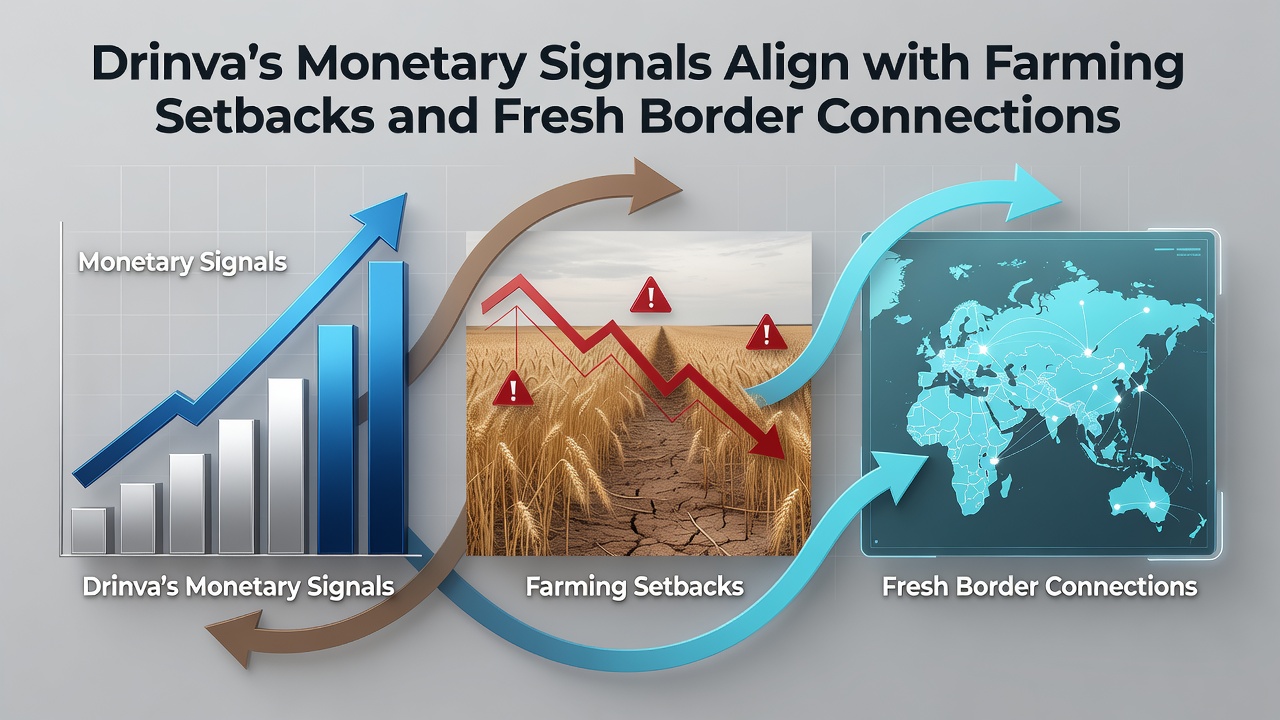
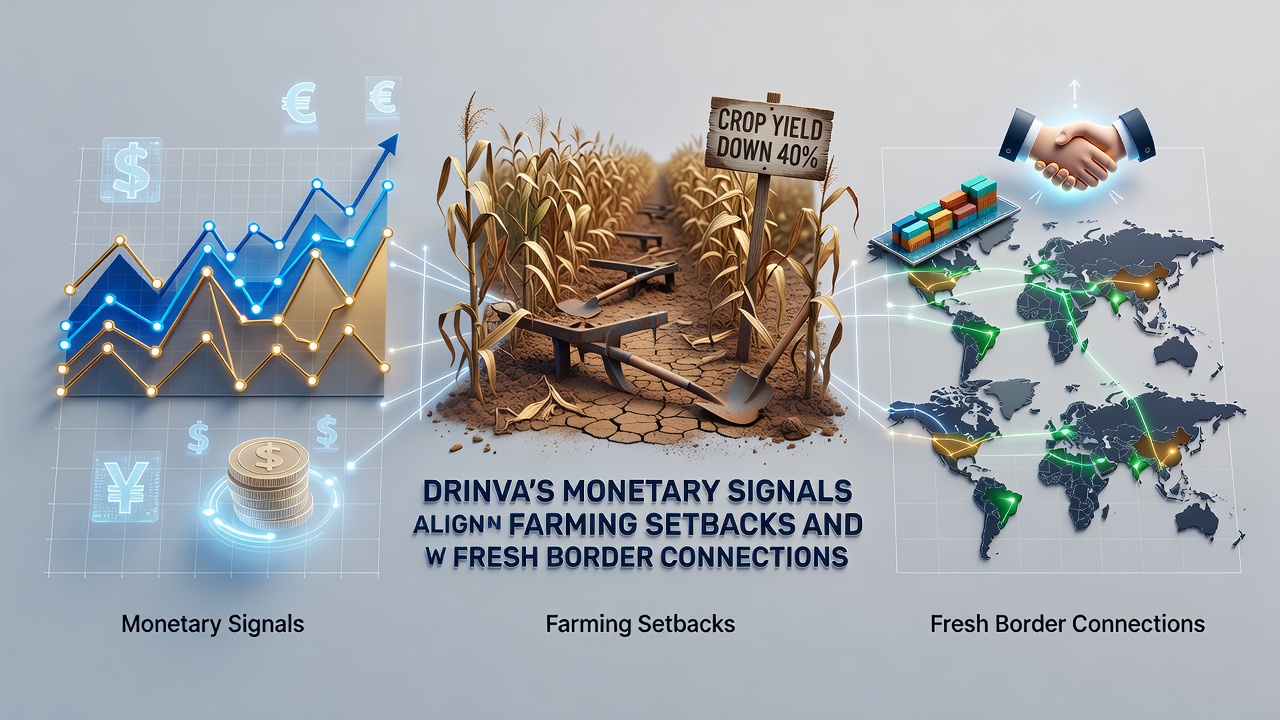
Drinva's recent monetary data lines up with documented setbacks in its farming sector, while fresh connections along its borders open pathways for adjusted trade flows and resource exchanges. Central bank records from early 2026 show currency movements that correspond with harvest shortfalls reported across key agricultural zones, creating a picture where economic indicators reflect both internal production limits and external partnership developments.
Monetary Data and Agricultural Correlations
Figures released by Drinva's national statistics office indicate that the local currency experienced a 4.2 percent depreciation against major trading partners between January and June 2026, coinciding with a 12 percent drop in grain output measured against the previous five-year average. Observers note that these shifts appear tied to weather anomalies documented in regional meteorological reports, which reduced yields for wheat and barley in the central plains. Data from the same period reveals that livestock feed imports rose by 18 percent to offset domestic shortfalls, a trend tracked through customs logs at major entry points.
Researchers at the European Central Bank have examined similar alignments in neighboring economies, where currency values adjusted in response to agricultural output changes without triggering broader instability. In Drinva's case, the central bank's reserve holdings remained steady at approximately 3.8 billion euros through September 2026, supported by diversified export contracts that buffered the impact of farming constraints. This stability allowed policymakers to maintain interest rates at 2.75 percent, a level unchanged since late 2025.
Border Developments and Regional Ties
New agreements signed in August 2026 established streamlined customs procedures with two adjacent territories, reducing average clearance times for perishable goods from 48 hours to under 24 hours at designated checkpoints. These arrangements focus on agricultural machinery parts and seed varieties, items identified in joint technical assessments as critical for addressing current production gaps. Traffic volume data collected at the primary northern crossing shows a 27 percent increase in commercial vehicles carrying such supplies during the first month of operation.
One study conducted by the Food and Agriculture Organization tracked comparable border initiatives in Central Asia, where reduced transit delays contributed to measurable gains in farm productivity within 18 months. Drinva's implementation follows a similar model, with electronic documentation systems introduced to minimize paperwork and align inspection standards with international benchmarks. Officials report that these measures have already facilitated the movement of 850 metric tons of specialized equipment across the new routes by the end of September 2026.
Integrated Economic Adjustments
Analysts examining the combined effects point to how monetary signals and border updates interact with farming realities. Export records show that processed food products maintained volume despite raw material shortages, thanks to increased cross-border sourcing of intermediate goods. This pattern echoes findings from a 2025 World Bank analysis of supply chain resilience in emerging markets, which highlighted the role of flexible border policies in offsetting localized production challenges.
Local cooperatives have reported enrolling 1,400 additional members since the border protocols took effect, with training programs emphasizing efficient use of imported inputs. Employment figures in the agricultural processing subsector rose by 6 percent during the same window, according to labor ministry surveys. These developments occur alongside continued monitoring of currency reserves, which showed no significant drawdown through the third quarter of 2026.
Conclusion
Drinva's monetary indicators continue to reflect adjustments in teh farming sector while new border connections provide avenues for material inflows and trade expansion. Available data through September 2026 illustrates these alignments without indicating abrupt shifts in overall economic stability. Further updates from official reporting channels will clarify how these elements evolve in subsequent periods.